The Nawakwa Outdoor Association of New York, Inc.

Keyholder —> Log in

The Nawakwa Outdoor Association of New York, Inc.

  • Instagram
  • Facebook
  • Twitter
  • Home
  • Calendar
  • All Posts
  • News
  • Photos
  • The Trail Marker
  • Join a Hike/Outing With Us
  • Directions
  • Interested in becoming a member?
  • Contact us

Touring the Camp

May 14, 2020 Leave a Comment

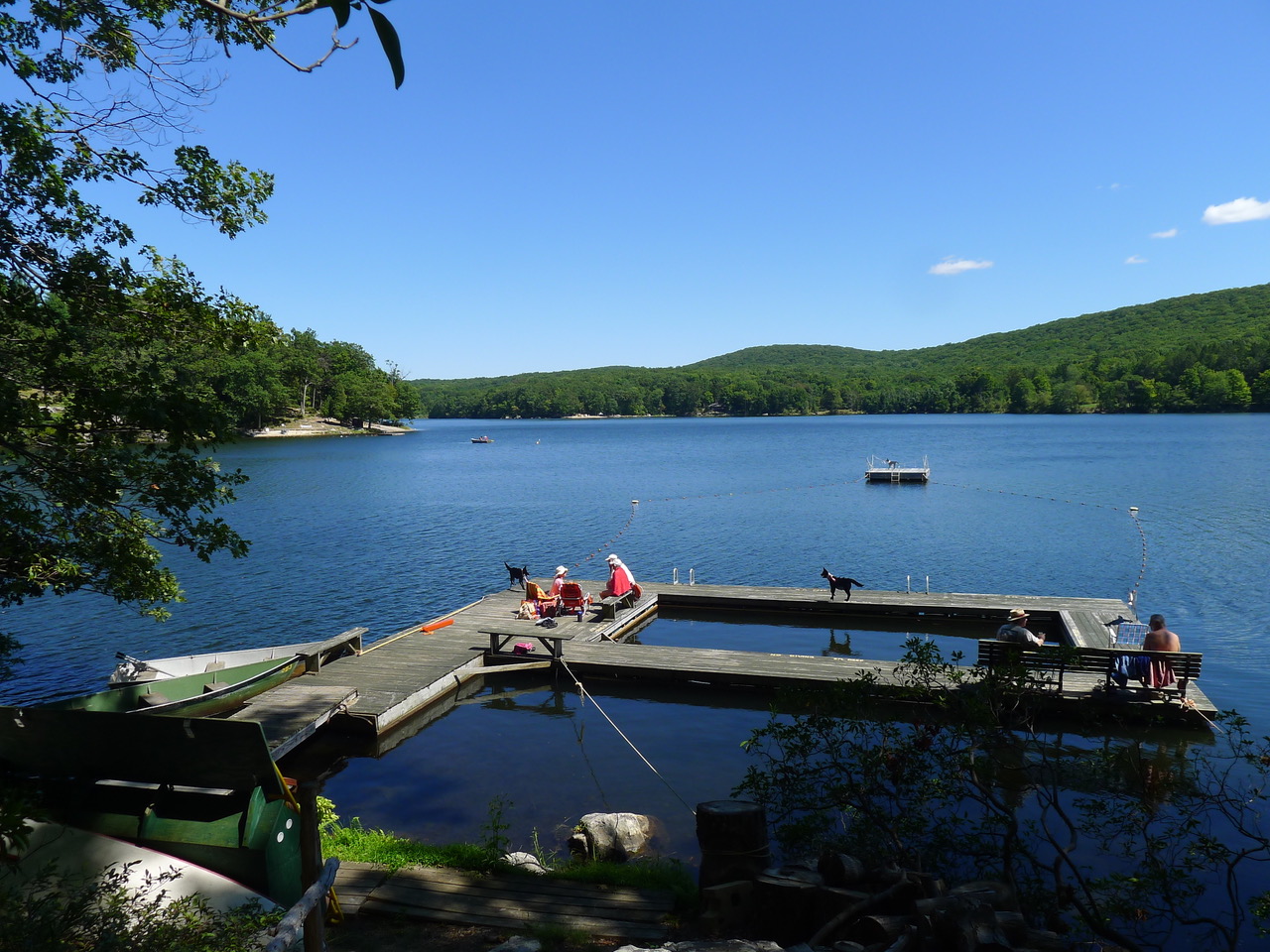
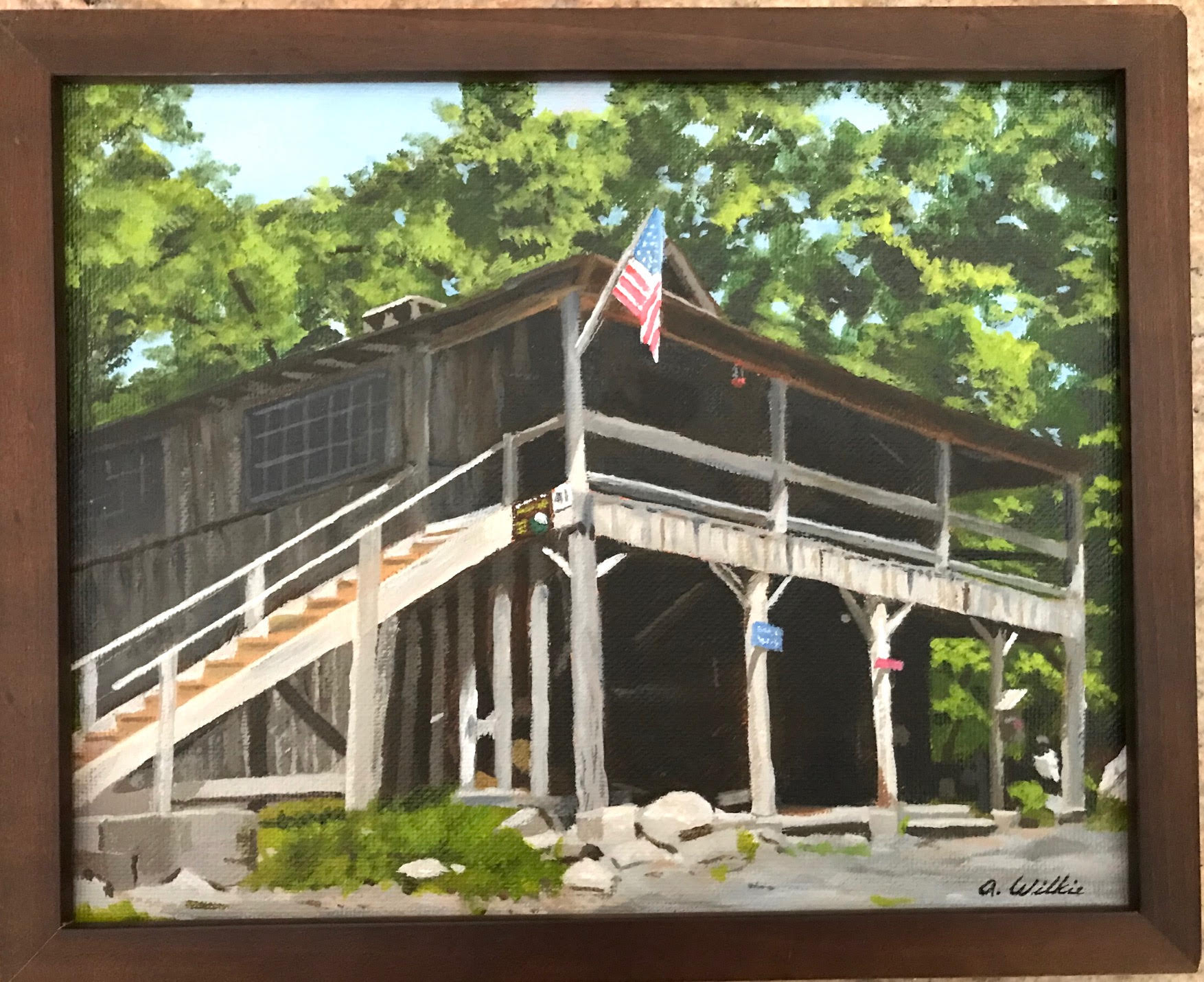
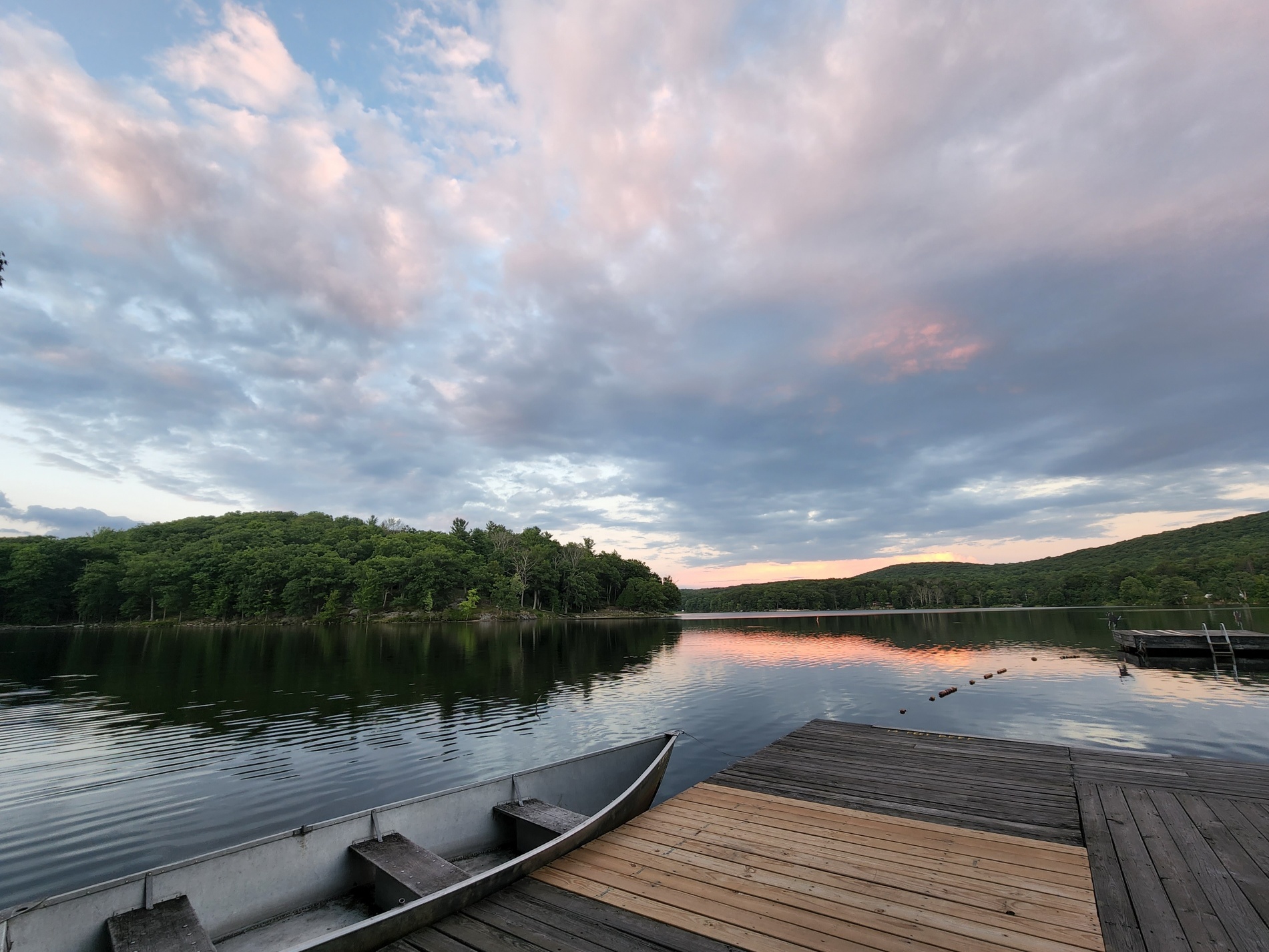
Since we can’t get to the camp, Glen has shared some pictures from his collection to remind us….

If you have any pictures to share, please contact Martymcd at me.com


Filed Under: Photos

100 Years: Building up camp

May 11, 2020 Leave a Comment

A series of posts as we look forward to the 100th Anniversary of ADKNY in 2023

We left off last time with the grand opening of the camp on Lake Sebago on April 17-18, 1926.  At that time it was yet to be named Nawakwa.

To quote from the April 30, 1926 issue of The Trail Marker “Being a Bulletin issued every now and then by the Chairman of the NY Chapter Adirondack Mountain Club, Inc.”  There actually was an Editor who put the publication together.

“The official opening took place on the following weekend of the 17th.  Over fifty members were on hand to give their approval and voice their enthusiasm.  No wonder! A great camp with its large living-dining room, its attractive open fireplace, its spacious kitchen, its comfortable sleeping quarters, its admirable view of the lake and surrounding country – no wonder!

Reservations – We must remind our members that reservations for accommodations should be made early, although ten beds will always be held until the Wednesday proceeding any weekend for late applicants.  Already two weekends in May are filled to the quota of fifty-full capacity being sixty.  The camp is so arranged that small groups can spend a few days or longer in one of the small cabins that is partitioned off for that purpose so that the main building need not be opened.  Reservations for such use should be made early to Miss Antonia H. Froendt … for dates up to July 1st.

Lake Sebago – The lake is now undergoing its final construction work.  The retaining wall is being filled in and the old road re-laid at a higher elevation.  It will not be long before the lake can be raised to its final level.  When it is, and even now, the attractions will be boating, swimming and fishing in season.  Boats are being purchased and will be delivered about May 15th.  The swimming will always be good as the beach slopes rapidly into deep water.  There will be a crib for the non-swimmers and a float for the experts.


Lockers – Many have inquired about locker space, so that it has been definitely decided to purchase this needed equipment.  The charge made for rental will be about $3.00 per year.  Please let the Camp Committee know through Miss Froendt that you wish to be so accommodated.

Trails – Trails are being marked to and from the Camp.  The new water-level route to Tuxedo is well marked with signs at the strategic corners.  Other trails will be opened up in the near future and marked with ADK markers.


The $10 Assessment – Many have not been heard from in answer to the call for the $10 assessment, either through carelessness, procrastination, or because of lack of enthusiasm.  To that last group, we say re-read page 1 of this bulletin and if that procedure does not stir you, spend a weekend at camp.  Some of our members who rarely went to Blue Bird promise to return often to the new camp……..so will you, when you see it.

Act Now – So please save the administration a lot of extra work by coming across right away quick, otherwise we must hound you by personal letters and actual contact when we see you on a walk or at the camp.  There can be no middle course.  All must pay their share of ……We must be fair to those who have paid in of $1,300 to date.  Sit down now and write your check to the order of the New York Chapter, ADK and mail it to the secretary, Miss Dorothy Roest …

P.S. Don’t wait to be invited to the new camp – just write in and say that you are coming.  Except for the popular weekends, there will always be room.”

Harriman State Park was a busy place during this period.  “The Palisades Interstate Park Commission was in the midst of acquiring the small hamlets including Queensboro, Pine Meadow, Johnsontown, and Sandyfield to create the Park.  2,200 people were settled in the area.  As part of the 1910 donation of the Harriman Land, additional funds were donated to acquire private homesteads to enlarge the park.  The PIPC was empowered with eminent domain to require homeowners to move.  In the 1940’s park police lieutenant James Gazaway shared this reflection with his family, “The hardest thing I ever had to do was to remove those people from their land.” The original NY Chapter camp, Quannacut was on land purchased around 1918.  It was formally Brooks House, home of Harvey Brooks.  This home, barn and orchard became the Camp

At the same time our Camp was opening, areas of the new Harriman State Park were being reforested.  The bare hills that had been clear-cut for lumber, charcoal and firewood for the local brickyards were replanted.  Within 20 years, the denuded hills were alive with trees, shrubs, flowering plants and ferns. (1)

  1. Reference – Image of America – Harriman State Park, Ronnie Clark Coffey

Ellen King

Archives Committee

Filed Under: Photos

Update from ADK in Lake Placid

May 7, 2020 Leave a Comment

https://www.adk.org/adk-property-closures-extend-new-york-forward/


Filed Under: News

100 Years: Opening Day

May 6, 2020 Leave a Comment

A series of posts as we look forward to the 100th Anniversary of ADKNY in 2023

As 1926 was a busy year for the NY Chapter, I’ll would dedicate a second message to this year.  To further quote from Ira Ayers’ A History, ADK Club New York:

“Preparatory to the purchase of all the essential supplies and equipment, a source of ready cash was required.  We had slightly more than broken even during our stay at Blue Bird.  The Council most wisely levied an assessment of $10.00 (today’s value: $144) on each member to help defray the costs.  As an aftermath of this action it was deemed unfair for all the succeeding new members to go untaxed.  Hence the $10.00 initiation fee was instituted.


Long before the April 1st date, the necessary equipment and supplies had to be decided upon and ordered.  As mentioned previously, the coal range, folding tables and pump and water line from the lake were brought in by the Park during the winter.  Norman B. Schomburg, through his company, purchased many of the items for us at wholesale.  These included the lockers, boats, oil lamps, the 2 stoves in the living room, 40 to 50 folding chairs, the old hickory chairs and settee, etc.  Also, he put me in touch with the Groff Bent Corporation for beds, mattresses and pillows, stating that we would get the bottom price on the same and thereby save his company’s 5% commission.  From the very beginning a telephone was considered an absolute necessity and was ordered.  It was installed in June.

During the winter we made several excursions down from Blue Bird, watching the progress of the construction and also watching the ice on the lake.  Our timetable called for the ice to be gone by April 1st.  In the meantime Walter Shannon spent a night in the partially erected building to be the first to spend a night in the new camp.


The first move was made on April 4th when we brought over from Blue Bird all our worldly possessions.  This included such items as blankets, a 3-burner oil stove, general utensils, “silverware”, the auxiliary water tank, the flexible flyers, etc.  At the same time, the beds, mattresses, and pillows were awaiting the April 10th delivery.

This brings us to April 10th, the actual opening day.  The grand opening took place a week later, April 17th, 1926.  To the average person now this may seem like any other day, but to us it was a grand occasion.  The company agreed to deliver the beds, mattresses and pillows if we would provide guides for the truck drivers.  Joe Durrenberger and I rode one truck and Herbert Hauptmann the other.  The lake was only partially flooded at that time, the water level being about the same as when work was done on Sebago Beach.  This would involve frequent wading when loading and unloading the boats due to the rocky shoreline.  A strong crosswind was blowing and the task of operating the old tublike boats with mattresses six high required considerable maritime skill.  The real labor involved at this stage consisted in carrying all the items up the hill to the various cabins and placed in order.  It is a marvel that 25 souls did so much in such a short time, completing the job well before night.

The cooks did a swell job in preparing a full meal for so many hungry mouths.  All the cooking had to be done on the 3-burner oil stove.  The coal range was installed but without any coal.  The dinner table consisted of three long boards nailed together and supported by saw-horses.  Improvised benches provide the seats.  This April 10-11, 1926 was actually a work weekend.

The official grand opening was a week later, April 17-18, 1926.  Every one of the 60 beds was occupied.  A grand and glorious time was had by all.

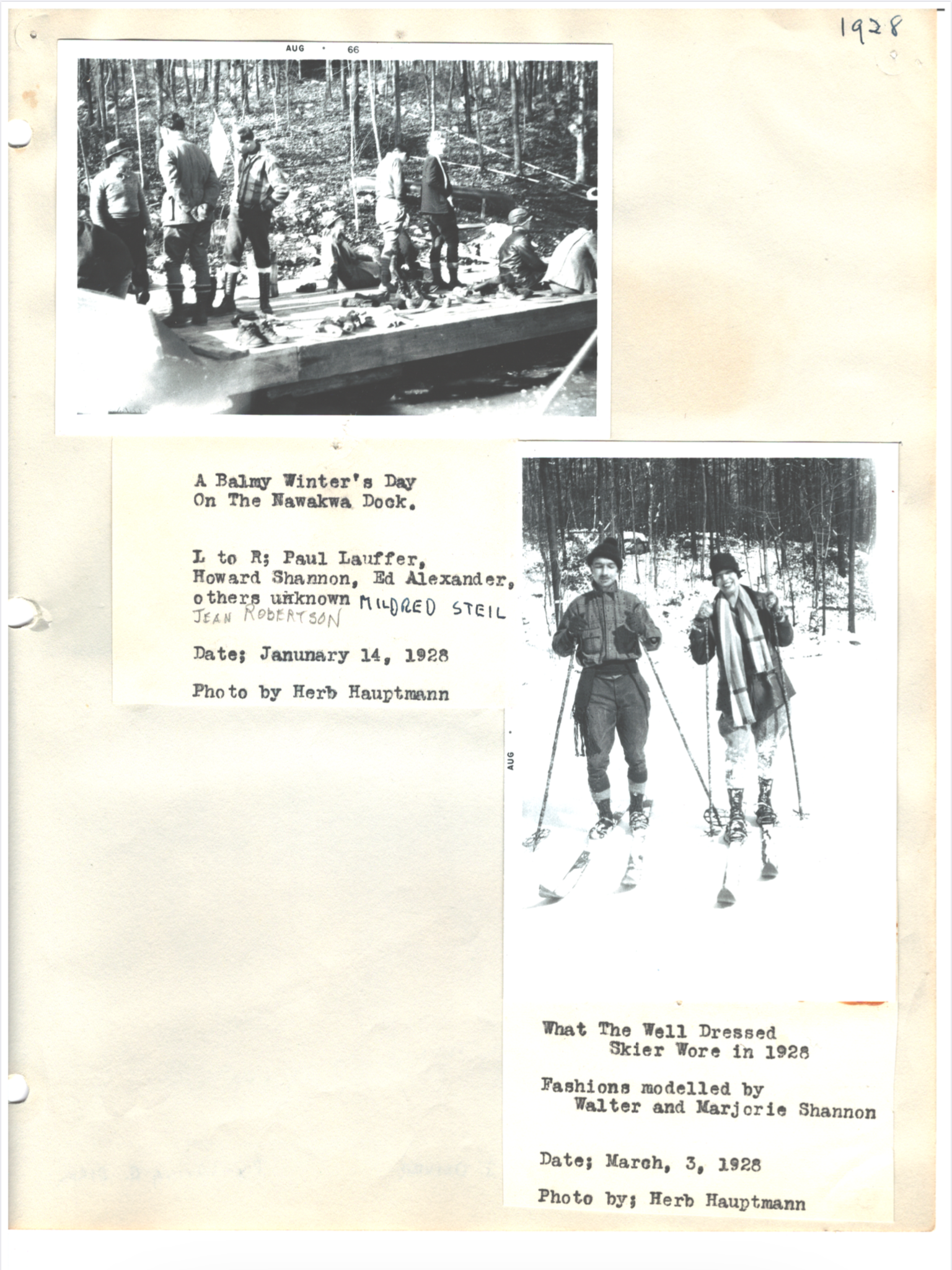
The attached photos by Herb Hauptmann are graciously donated by Geoff Weaver.  They are from his father ( Walter Weaver)’s photo album.

Ellen King

Archives Committee


Filed Under: News Tagged With: ADKNY, Harriman, Lake Sebago, Nawakwa

100 Years: Transitioning from Camp Blue Bird 1925 – 1926

May 5, 2020 Leave a Comment

A series of posts as we look forward to the 100th Anniversary of ADKNY in 2023

The NY Chapter, ADK moves from subleasing Camp Blue Bird to having a camp of our own.  To quote from Ira Ayers’ “A History”:

“During the summer of 1925, while working for the Camp Department of the Park, Miss Jolliffe, the Superintendent of Camps, asked me if the New York Chapter would like to have a camp on the new Lake Sebago. Elevation 778 feet.  My reply was a positive “yes” but that the official offer should be made direct to the Chapter Council.  This was done and the offer was immediately accepted officially.

The first big question that required an answer was where should it be located.  A committee consisting of A.T. Shorey, Adolph Sippe and a third was appointed to recommend the site.  The location selected by this committee was in the birch grove on the east side and near the upper end of the north arm.


This provoked a storm of protests.  In those days almost everyone rode to Sloatsburg or Tuxedo and walked in.  The protestors wanted a location on the west side of the lake and on deep water.  Herbert Hauptmann, Walter Shannon and myself and others walked down from Blue Bird on numerous occasions to scout the area.  We pressured the Council to select the present site which appears to us to have been the best.  The site was officially selected by the Chapter and Frank J. Oliver met J.J. Tamsen, the Superintendent of Construction, and the location was official with the Park.

Before any definite action could be taken it was necessary to decide on what the capacity of the camp should be.  The Camp Committee had many loud and active sessions discussing this point.  Some were very strong for a capacity of about 25.  Others wanted a much larger capacity to provide for growth and expansion, and also to provide income sufficient to pay the rent.  The final decision was a capacity of 60.  Now we were in a position to tell the Park the desired dimensions and number of cabins, and also to make the appropriate plans for the necessary equipment to be purchased.   From our experience at Blue Bird, it was decided to have all the sleeping quarters out and away from the main building.  Also, it was thought best to have the buildings somewhat removed from the shoreline.


I met Mr. Tamsen at the site and selected the locations of the main building, the five cabins and the dock.  The sixth cabin was added in 1929.  The dock was located on deep water and also where it would be clearly visible from the porch.  Mr. Tamsen then made his plans for the construction which we requested to be completed by April 1, 1926.  The chimney and fireplace were completed before the winter set in.  All the equipment and supplies were trucked in over the ice and up the old road from the canoe dock.  Also the coal range, the small folding tables and the pump and water line from the lake was brought in at the same time.  These items were purchased from the Park.  Of course there was no road in to camp at that time.”

1925 was a busy year for the NY Chapter and the Adirondack Mountain Club.  Our Chapter had been established two years earlier.  The Albany Chapter was the first Chapter to be established only three years earlier.  A vote was taken to amend the ADK Constitution to address the division of members’ dues between the parent club and the chapters to provide the chapters with the necessary finances to support their local activities.  Members of the NY Chapter withheld payment of their dues to support this cause.  One incentive for the main club to support this was their interest in forming additional chapters.  The new financial arrangement would encourage regions throughout New York State to create chapters and thus increase the membership of the ADK.

The attached photos are from Walter Weaver’s photo album generously contributed by his son, Geoff Weaver.  The photographer:  Herb Hauptmann.


Ellen King

Archives Committee

Filed Under: News, Photos

  • « Previous Page
  • 1
  • …
  • 91
  • 92
  • 93
  • 94
  • 95
  • 96
  • Next Page »
June 2026
S M T W T F S
 123456
78910111213
14151617181920
21222324252627
282930  
« May    

Recent Posts

  • Now Available: Camp Nawakwa 100th Anniversary T-Shirt and Hoodies June 27, 2026
  • Join us for a bike ride Saturday June 13th! June 8, 2026
  • Photos from the June 4 Dinner Nawakwa June 7, 2026
  • Photos from the Applicant Orientation Workshop May 30 May 31, 2026
  • News: Paddleboards are now allowed in Harriman State Park May 27, 2026

Founded in 1923, the Nawakwa Outdoor Association of New York, Inc. is a membership organization dedicated to the enjoyment of the outdoors through hiking, walking, camping, swimming, skiing, sailing, canoeing, and kayaking, and to the conservation and preservation of our wilderness, particularly the mountains, lakes, trails, and camping areas of the metropolitan New York region.
 

Copyright © 2026 · Outreach Pro on Genesis Framework · WordPress · Log in